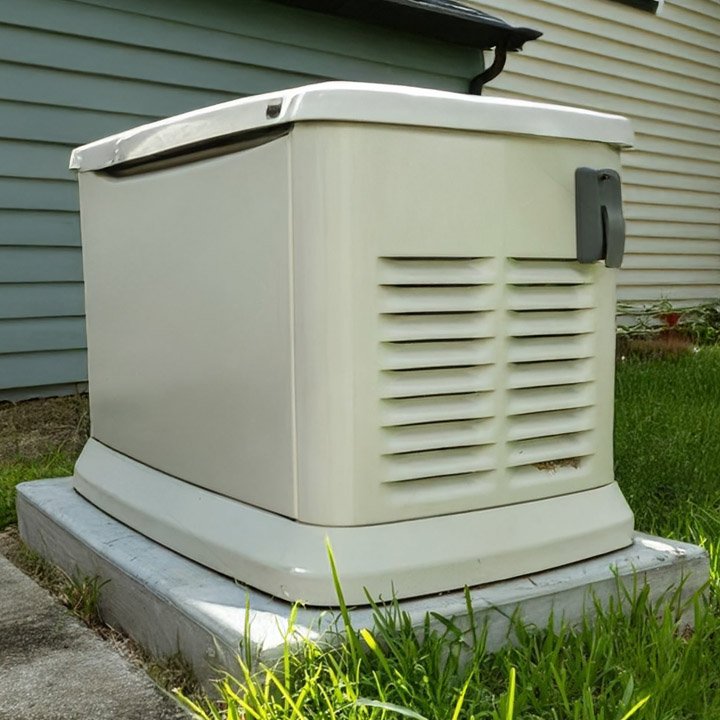
When the lights go out, a reliable generator isn't just a convenience; it's peace of mind. But unlocking that power, especially from a robust machine like a 9000-watt generator, requires more than just adding fuel and pressing a button. It demands careful installation & setup for 9000w generators, an understanding of critical safety protocols, and a commitment to responsible operation. Think of it as a powerful ally, one that needs to be properly introduced to your home and kept on its best behavior.
This guide is designed to transform you from a generator novice into a confident, safety-conscious operator. We'll walk through everything from unboxing to powering your critical loads, ensuring you get your 9000w generator up and running safely and effectively.
At a Glance: Your Generator Setup Quick Checklist
- Safety First: Always operate outdoors, at least 20 feet from structures, with exhaust pointed away. Carbon monoxide is deadly.
- Grounding is Non-Negotiable: Properly ground your generator according to local codes before starting it.
- Fuel & Oil: Use fresh, stabilized 87+ octane unleaded gasoline (max 10% ethanol) and the correct SAE 10W-30 (or 5W-30 below 32°F) engine oil.
- Inspect Before Use: Check for damage, loose parts, and ensure proper fluid levels.
- Break-In Period: Run for about 3 hours with a light load, then change the oil after 20 hours of initial use.
- Load Management: Know your generator's running (7,250 watts) and starting (9,000 watts) capacity, and never exceed it. Connect loads largest to smallest.
- Professional Help for Standby: Connecting to home electrical systems must be done by a licensed electrician.
Why a 9000w Generator? Understanding Your Powerhouse
A 9000-watt generator, like the Predator 9000, is a substantial piece of equipment, capable of powering a wide range of essential household items during an outage. With 7,250 running watts and 9,000 maximum starting watts, it can handle everything from your refrigerator and freezer to a sump pump, well pump, furnace fan, and even some smaller appliances or tools simultaneously. This versatility makes it a popular choice for emergency home backup, job sites, or recreational use. To truly appreciate its capabilities and ensure you're making the most of your investment, it's wise to learn more about 9000w generators and their specific features.
However, with great power comes great responsibility. The installation and setup process is where critical safety measures must be meticulously followed to protect yourself, your family, and your property.
Safety Above All Else: Your Non-Negotiables
Before you even think about adding fuel or oil, you need to understand the inherent risks and how to mitigate them. These aren't suggestions; they are DANGER and WARNING level precautions.
The Invisible Killer: Carbon Monoxide (CO)
This is the single most critical safety concern. Generator exhaust contains carbon monoxide, a colorless, odorless gas that can kill in minutes.
- NEVER Indoors: Let's repeat that: NEVER use your generator inside a home, garage, basement, crawlspace, shed, or any partially enclosed area. Even open doors and windows or fans are not enough.
- OUTSIDE and Away: Always operate your generator outdoors, at least 20 feet (about two car lengths) away from people, animals, and any structures. Direct the exhaust away from windows, doors, and vents that could allow fumes to enter buildings.
- CO Alarms are Essential: Install battery-backup carbon monoxide alarms in nearby buildings, especially your home. These are an additional layer of protection, not a substitute for proper placement.
- Understand CO Sensor Lights: If your generator has a CO sensor (like a flashing red light), it means dangerous CO levels are detected, and the generator will likely shut off. If this happens, immediately move to fresh air, ventilate the area, and relocate the generator to a safer, better-ventilated spot before resuming operation. A flashing yellow light might indicate a sensor malfunction; do not use the generator and call for service.
Fire & Explosion Hazards: Fuel Handling
Gasoline is highly flammable and its fumes are potentially explosive. Proper storage and handling are paramount.
- Cool Engine Only: Never fill the gas tank while the engine is running or hot. Allow it to cool down completely.
- Well-Ventilated Area: Refuel only in a well-ventilated outdoor area, away from any ignition sources (sparks, pilot lights, open flames, smoking).
- Clean Up Spills: Immediately clean up any spilled gasoline. Allow fumes to evaporate before starting the generator. Dispose of soaked materials safely and according to local codes.
- Proper Storage: Store gasoline in approved containers, away from living areas and ignition sources. Do not use fuel stored in metal or dirty containers, as this can introduce contaminants.
- Fire Extinguishers: Have multiple ABC class fire extinguishers readily available.
Electrocution Risks: Proper Connections & Grounding
Electricity and water are a deadly combination. Improper connections can cause backfeed into the utility grid, electrocution, or fires.
- NO Wet Conditions: Never connect or disconnect loads while standing in water or on wet ground. Do not touch electrically energized parts with uninsulated objects.
- Grounding is Mandatory: You MUST ground your generator in accordance with all relevant electrical codes and standards before operation. We'll detail this process below. Do not operate the generator before grounding it.
- Standby Power Requires a Pro: If you plan to connect your generator to your home's electrical system (for standby power), this is NOT a DIY task. It must be made by a trained and licensed electrician using an approved transfer switch. This switch isolates generator power from utility power, preventing dangerous backfeed.
- GFCI Protection: Ensure your generator has Ground Fault Circuit Interrupter (GFCI) receptacles, and test them before each use. Disconnect all devices, start the engine, press the "Test" button (the "Reset" button should extend, cutting power), then press "Reset" for use. If the test fails, do not use that receptacle.
- Insulate Connections: Always insulate all connections and disconnected wires to guard against electric shock.
Personal Protection & Site Selection
- Wear Your PPE: During setup, service, and use, wear ANSI-approved safety goggles, heavy-duty work gloves, and a dust mask/respirator. Also, wear ear protection; generators can be loud, and prolonged exposure to noise levels above 85 dBA is hazardous.
- Clear the Area: Keep children and spectators at least six feet away from operating equipment.
- Hot Parts: The engine and exhaust system components become extremely hot during use. Do not touch them and allow them to cool down completely before handling.
- Level Surface: Always set up and use the generator only on a flat, level, well-ventilated surface to prevent tipping and ensure proper operation.
- Spark Arrestor: Your generator likely requires a spark arrestor (check local fire agencies). Ensure it's installed to prevent fire hazards from engine sparks.
Getting Your Generator Ready: Initial Setup Steps
Once you've absorbed the safety fundamentals, it's time to get your 9000w generator physically ready for action.
Unboxing & Assembly
Carefully remove the generator from its packaging. You may need to attach components like the wheel kit (often sold separately, like the #64788 for the Predator model) and handles. Follow the specific instructions in your generator's manual for these steps. Ensure all hardware is securely fastened. Confirm that a spark arrestor is properly installed.
Battery Installation (for Electric Start)
If your 9000w generator features an electric start, you'll need to install a battery (typically a 12V, 9Ah minimum sealed lead-acid battery, like the Thunderbolt Battery #62586, sold separately).
- Place the fully charged battery in its designated holder.
- Secure it with the included hardware.
- Attach the positive (red) cable to the battery's positive (+) terminal.
- Attach the negative (black) cable to the battery's negative (-) terminal.
Crucial First Step: Grounding Your Generator
This cannot be stressed enough: grounding is essential for safe operation. Local electrical codes vary, so it's always best to consult a licensed electrician or local authorities for specific requirements.
- Select a Grounding Electrode:
- Pipe or conduit: Minimum ¾ inch diameter, 8 feet long, with an anti-corrosion coating if steel.
- Rod: Stainless steel or copper/zinc-coated steel, minimum 5/8 inch diameter, 8 feet long.
- Installation: Drive the chosen electrode at least 8 feet vertically into the ground. If you hit a rock layer that prevents vertical installation, you can drive it at an angle not exceeding 45 degrees. If that's still not possible, bury it horizontally in a trench at least 30 inches deep. Protect any portion of the electrode that remains above ground.
- Connect the Ground Wire: Connect a #6 AWG grounding wire (not included) from your generator's designated Grounding Terminal to the grounding electrode. Ensure a secure, tight connection at both ends.
High Altitude Considerations
If you operate your generator above 3000 feet, you might need to make carburetor adjustments to maintain performance and avoid voiding your warranty. The fuel-air mixture needs to be leaner at higher altitudes.
- This adjustment typically requires an altitude kit and should be performed by a qualified mechanic.
- For the Predator 9000, specific main jets (e.g., 1a for 3000-6000 ft, 2a for 6000-8000 ft) are needed.
- The process involves carefully disassembling parts of the air cleaner and carburetor, replacing the main jet, and reassembling. Always ensure the engine is off, cool, and the fuel valve is closed before attempting this.
Fueling Up & Oiling Down: Pre-Start Essentials
Your generator needs both oil and fuel to run. Don't skip these critical pre-start checks.
Engine Oil: The Lifeblood
WARNING: Operating your generator with insufficient engine oil will VOID your warranty and can cause severe engine damage. Modern generators often have a low-oil shutdown feature, preventing them from starting if the oil is too low.
- Check Level: Ensure the engine is stopped and level. Close the fuel valve. Clean around the oil dipstick. Remove the dipstick, wipe it clean, reinsert it (without threading it in), and remove it again to check the oil level. It should be at the "full" mark.
- Add Oil (if needed): If the oil level is low, add the recommended engine oil:
- SAE 10W-30: For temperatures above 32°F (0°C).
- SAE 5W-30: For temperatures at or below 32°F (0°C).
- The Predator 9000 has an engine oil capacity of 1 quart.
- Secure: Thread the dipstick back in clockwise.
Fuel: Powering Your Machine
DANGER: Gasoline is extremely flammable. Refer back to the "Fire & Explosion Hazards" section before proceeding.
- Safety First: Fill in a well-ventilated area away from any ignition sources. Ensure the engine is cool. Do not smoke.
- Access Tank: Clean around the fuel cap. Unscrew and remove it.
- Fill Tank: Fill the tank to about 1 inch under the fill neck with 87+ octane unleaded gasoline that has been treated with a fuel stabilizer.
- Avoid Ethanol: Do not use gasoline with more than 10% ethanol (E10), and never use E85. These can damage your engine.
- Clean Fuel: Only use fresh, clean gasoline from a proper fuel container.
- Secure: Replace the fuel cap securely. Wipe up any spilled fuel and allow it to evaporate completely before attempting to start the generator. The Predator 9000 has a fuel capacity of 7.79 gallons (29.5 liters).
The First Spark: Starting Your 9000w Generator
With your generator safely grounded, fueled, and oiled, you're ready to bring it to life.
Pre-Start Checklist
Before every use, perform these quick checks:
- Brush off the outside of the engine, removing any debris.
- Check and clean the air filter elements.
- Confirm engine oil and fuel levels are correct.
- Verify that carbon monoxide alarms are installed in nearby buildings.
- Ensure all electrical loads are unplugged from the generator.
Starting Procedure
The Predator 9000 offers both manual (recoil) and electric start options.
- Choke Position:
- Cold engine: Move the Choke lever to the "START" position.
- Warm engine: Leave the Choke lever in the "RUN" position.
- Fuel Valve: Open the Fuel Valve.
- Choose Your Start Method:
- Manual Start:
- Turn the Engine Switch to "ON."
- Pull the Starter Handle slowly a few times to prime the carburetor.
- Pull the Starter Handle gently until you feel resistance, then pull quickly and smoothly. Repeat until the engine starts.
- Do NOT let the handle snap back; guide it gently.
- Electric Start:
- Turn the Engine Switch to "START." (Do not hold for more than 5 seconds; wait one minute between attempts to prevent overheating).
- Once the engine starts, release the switch.
- Choke Adjustment: After the engine starts, if the Choke was in "START," slowly move it to the "RUN" position. Moving it too quickly can stall a cold engine.
- Warm-Up: Allow the engine to run at no load for five minutes to stabilize and warm up before connecting any electrical devices.
The Break-In Period
For optimal generator longevity, observe the break-in period:
- Operational Break-in (about 3 hours): During the first few hours of operation, avoid applying a heavy load. Run the generator with light to moderate loads.
- Maintenance Break-in (about 20 hours): After approximately 20 hours of initial use, it's crucial to change the engine oil. This removes any manufacturing residues or wear particles that accumulated during the initial break-in.
Connecting Your Loads: Powering Up Safely
Now that your generator is running smoothly, it's time to connect your appliances. This isn't just about plugging things in; it's about managing your power safely and efficiently.
Understanding Your Wattage
- Running Watts: This is the continuous power your generator can produce (7,250 watts for the Predator 9000). This is the sum of the watts for all items running simultaneously.
- Starting Watts (Surge Watts): Many motorized appliances (refrigerators, pumps, power tools) require a brief surge of extra power to start. Your generator can handle a higher starting wattage (9,000 watts for the Predator 9000) for these short bursts.
Calculating Your Needs
- List Everything: Make a list of all the items you want to power simultaneously.
- Find Running Watts: For each item, find its running wattage (often on a label). If only amperage is listed, use Watts = Volts x Amps (e.g., a 120V, 10A appliance uses 1200 watts).
- Sum Running Watts: Add up the running watts for all items. This total must be less than your generator's continuous running wattage (7,250W).
- Identify Highest Starting Watts: From your list, find the single item with the highest starting wattage (typically 2-3 times its running wattage for motor-driven items). Lights and heaters don't usually have significant starting watts.
- Calculate Total Starting Watts: Add the highest single starting wattage to your total running wattage. This combined figure must be less than your generator's maximum starting wattage (9,000W).
Example:
- Refrigerator: 800 running watts, 2000 starting watts
- Well Pump: 1000 running watts, 3000 starting watts (highest)
- Lights: 500 running watts
- Total Running: 800 + 1000 + 500 = 2300 watts (Well within 7250W)
- Total Starting: 2300 (running total) + 3000 (well pump starting) = 5300 watts (Well within 9000W)
Connecting Devices: A Step-by-Step Approach
WARNING: Never exceed the generator's maximum power rating. Overloading can trip circuit breakers or shorten service life.
- Test GFCI First: Before plugging in any loads, test the GFCI receptacles as described earlier.
- Plug In Systematically: Connect your products one by one, starting with the items requiring the most wattage or the highest starting wattage. This allows the generator to adjust to the load gradually.
- Inductive Loads First: Appliances with motors (inductive loads) should generally be connected early.
- Lights Next: Connect lights and other resistive loads.
- Sensitive Electronics Last: If you're powering voltage-sensitive appliances (TVs, computers, microwaves), connect them last. It's highly recommended to plug them into a UL® Listed voltage surge protector, which then plugs into the generator. For very sensitive electronics, an inverter-type or pure sine wave generator is generally preferred.
- Monitor Load: If the engine speed or voltage fluctuates noticeably with a load below the running watts capacity, you might try moving the Choke Lever to a halfway position to stabilize it.
- Circuit Breaker Trips: If a circuit breaker trips, unplug loads, reset the breaker to "ON" (for push-button breakers, allow a few minutes to cool down), and then re-attach loads gradually, ensuring you don't overload that specific circuit. The Predator 9000 has various receptacles: two 120V GFCI, one 120V twistlock, one 120V/240V twistlock, and a 12V DC outlet.
Standby Power: When to Call a Pro
If your goal is to power your home's entire electrical system during an outage, rather than just plugging in individual appliances, you need a "standby power" setup.
- This involves hardwiring the generator into your home's electrical panel via a transfer switch.
- This connection absolutely MUST be made by a trained and licensed electrician. Improper connections can create deadly backfeed, sending power onto the utility grid and endangering utility workers, or causing electrocution and fires in your home. It also ensures compliance with all local electrical codes.
Shutting Down & Storing Right
Proper shutdown and storage prolong your generator's life and ensure it's ready for the next use.
Stopping the Engine
- Emergency Stop: In an emergency, simply turn the Engine Switch to "OFF."
- Normal Conditions:
- First, turn off all electrical loads, then unplug them from the generator.
- Turn the Engine Switch to "OFF."
- Close the Fuel Valve.
Post-Use & Storage Tips
- Cool Down: Allow the generator to cool down completely before moving or storing it.
- Cleanliness: Keep the generator, engine, and surrounding area clean.
- Secure Storage: Store the generator in a clean, dry, safe location, away from direct sunlight, extreme temperatures, and moisture.
- Long-Term Storage: For extended periods of inactivity (over 30 days), consult your manual for fuel stabilization or draining procedures to prevent gumming and damage to the fuel system.
Keeping It Running: Essential Maintenance for Longevity
Regular maintenance is key to ensuring your 9000w generator performs reliably when you need it most. Always disconnect devices, turn off the engine, allow it to cool, and disconnect the spark plug cap before performing any maintenance.
Your Maintenance Schedule
- Before Each Use:
- Brush off outside of engine.
- Check engine oil level.
- Check air cleaner.
- Install CO alarms in nearby buildings.
- Every 3 Months or 50 Hours:
- Change engine oil.
- Monthly or Every 20 Hours (more frequently in dusty areas):
- Clean/replace air cleaner.
- Every 6 Months or 100 Hours:
- Clean Spark Arrestor.
- Check and clean spark plug (NHSP® / Torch® F6TC, gap 0.028' – 0.031').
- Yearly or Every 300 Hours (by qualified technician):
- Check/adjust idle speed.
- Check/adjust valve clearance (Intake: 0.004'–0.006'; Exhaust: 0.004'–0.006').
- Clean fuel tank/strainer/carburetor.
- Clean carbon build-up from combustion chamber.
- Every 2 Years (by qualified technician):
- Replace fuel line if necessary.
Key Maintenance Tasks
- Engine Oil Change:
- Ensure the engine is stopped and level. Close the fuel valve.
- Place a drain pan beneath the drain plug.
- Remove the drain plug and tilt the generator to completely drain the old oil.
- Replace the drain plug securely.
- Remove the dipstick, wipe it clean, and add new SAE 10W-30 oil (or appropriate viscosity) to the full level (without threading the dipstick in when checking).
- Replace the dipstick.
- Dispose of used oil responsibly according to local regulations.
- Air Filter Element Maintenance:
- Remove the air cleaner cover and elements.
- For "paper" filters, carefully blow dust out from the inside using pressurized air (always wear PPE).
- For foam filters, wash them in warm, soapy water, rinse thoroughly, allow to air dry completely, and then lightly oil with clean engine oil before reinstalling.
- Spark Plug Service:
- Remove the spark plug cap and then the spark plug.
- Inspect for wear, carbon buildup, or damage. Clean with a wire brush or replace if necessary.
- Check the gap using a feeler gauge and adjust if needed (0.028' – 0.031').
- Reinstall the spark plug and cap.
Troubleshooting Common Hiccups
Even with proper setup, you might encounter minor issues.
- Generator Won't Start:
- Check fuel level.
- Check oil level (low oil shutdown).
- Ensure the fuel valve is open.
- Ensure the engine switch is "ON."
- Check the choke position (correct for cold/warm engine).
- Is the spark plug clean and gapped correctly?
- Circuit Breaker Trips:
- You're likely overloading the generator or that specific circuit. Unplug some loads, reset the breaker, and try again, connecting fewer items.
- Generator Shuts Off (CO sensor):
- Immediately move to fresh air. Relocate the generator to an even better-ventilated area, at least 20 feet from any structures, with exhaust pointed away. Allow plenty of time for ventilation before attempting to restart.
Final Thoughts: Empowering Your Power Independence
Setting up and maintaining a 9000w generator might seem daunting at first, but by following these detailed steps and prioritizing safety, you'll gain the confidence to harness its power effectively. Your generator is an investment in reliability, whether for emergencies, recreation, or work. Treat it with respect, adhere to the safety guidelines, and keep up with its maintenance, and it will serve you faithfully for years to come. With this guide, you're not just installing a machine; you're building a foundation for consistent, safe power when you need it most.